Lighting designed & manufactured in Valencia, Spain
0%

China’s outdoor lighting industry has changed quickly, driven by energy efficiency, smart controls, and stricter project requirements. This guide examines China’s top 10 Sustainable outdoor lighting manufacturers through practical and verifiable criteria. These criteria include product durability, LED performance, material selection, certifications, export experience, and after-sales support.

Real projects reveal more than polished brochures. A coastal walkway may demand IP66 protection, marine-grade finishes, and corrosion-resistant aluminum. A rural solar installation needs reliable batteries, efficient panels, and simple maintenance access. Commercial developments may require dimming systems, motion sensors, and compatibility with building controls. The selected manufacturers are assessed against these conditions, not only their advertised product ranges.

Details matter most.

The guide also considers factory capabilities, quality-control procedures, testing evidence, and customization experience. Where available, it reviews technical documents, project references, and public company information. However, sustainability claims are not always measured consistently. Some manufacturers provide limited lifecycle data, while others emphasize energy savings without explaining replacement or recycling plans. That weakness deserves attention.

This introduction does not assume that the largest supplier is automatically the best choice. Buyers should compare warranty terms, lighting simulations, spare-part availability, and local compliance requirements before signing a contract. Product performance can vary between models, even within one brand. A manufacturer may excel in solar streetlights but offer weaker architectural fixtures. Careful verification remains essential when selecting a long-term lighting partner.
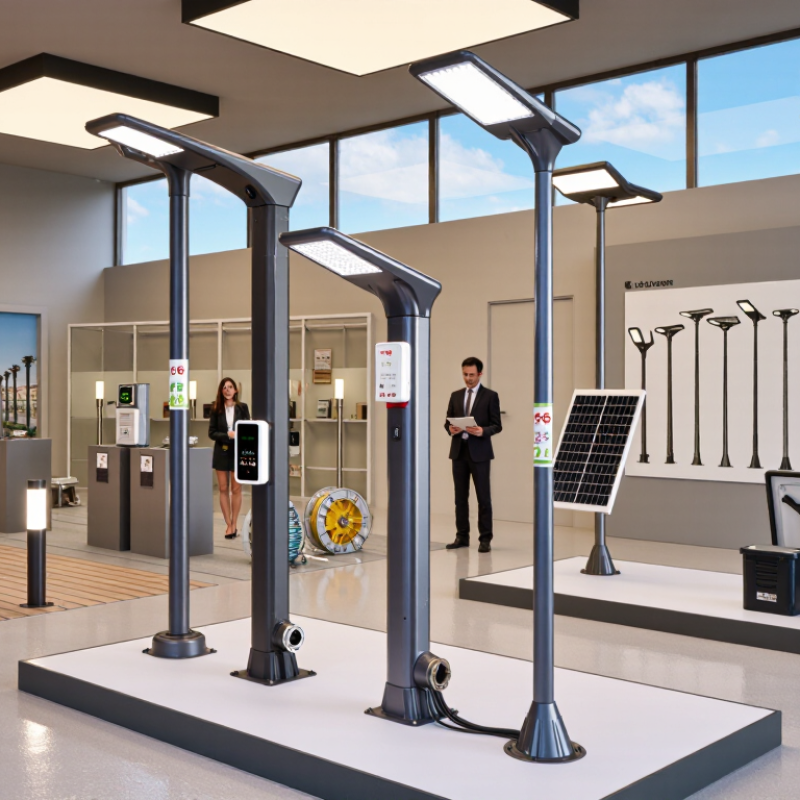
China Top 10 Sustainable Outdoor Lighting Manufacturers?

What Defines a Sustainable Outdoor Lighting Manufacturer?

A sustainable outdoor lighting manufacturer does more than sell efficient fixtures. It designs products for long service, repair, and responsible material use. In China, credible manufacturers should provide clear factory information, test reports, and traceable component records. Vague claims are not enough.

Practical experience appears in the details. Look for sealed housings, corrosion-resistant finishes, replaceable drivers, and batteries rated for repeated cycles. A well-designed solar fixture should maintain stable output after cloudy days, not only during showroom demonstrations. LED efficiency matters, but thermal management matters too. Excessive heat shortens product life. That mistake still appears in low-cost projects.

Reliable manufacturers measure environmental impact across production and use. They reduce unnecessary packaging, control factory waste, and select recyclable aluminum or certified materials where practical. They should explain energy consumption, expected lifespan, maintenance intervals, and end-of-life options in plain language. Independent testing adds authority, especially for water resistance, electrical safety, and photometric performance. Documentation should match the actual product.

No factory gets everything right. A manufacturer that admits limitations may be more trustworthy than one promising zero impact. Ask how defects are handled, whether spare parts remain available, and how warranty data changes future designs. Sustainable manufacturing is not a green label. It is a chain of verifiable decisions, from raw material selection to the last working lamp.

How China’s Outdoor Lighting Industry Supports Sustainability

China’s Outdoor Lighting Industry and Sustainability

China’s outdoor lighting industry is shifting from simple brightness to measured environmental performance. The International Energy Agency reports that efficient LED systems can use about 75% less energy than incandescent lighting. They can also last many times longer. For streets, parks, and logistics yards, this reduces replacement trips, maintenance labor, and material waste.

Manufacturers increasingly combine LEDs with solar panels, motion sensors, dimming controls, and remote monitoring. A lamp can stay at 30% output after midnight, then brighten when pedestrians arrive. This is practical, not decorative. Smart controls also help cities track energy consumption and detect failures earlier.

However, solar lighting is not automatically sustainable. Battery replacement, cloudy weather, and recycling remain difficult points. The industry sometimes celebrates installation numbers too quickly.

Material choices matter as well. Aluminum housings can support heat dissipation and recycling, while modular drivers make repairs easier. Life-cycle assessment should examine production, transport, operation, and disposal.

The International Commission on Illumination’s CIE 150 guidance also stresses controlling obtrusive light. Excessive glare can disturb residents, wildlife, and night skies. Research published in Science Advances found global artificial light increased by roughly 2.2% annually between 2012 and 2016.

China’s manufacturers can support sustainability through accurate photometric testing, transparent energy data, and designs that illuminate only where needed. The hard lesson is simple: brighter is not always better.

China’s Top 10 Sustainable Outdoor Lighting Manufacturers

China’s Top 10 Sustainable Outdoor Lighting Manufacturers

China’s leading sustainable outdoor lighting manufacturers are changing how streets, parks, campuses, and resorts use energy. The strongest candidates usually combine high-efficiency LEDs with recyclable aluminum housings, long-life drivers, and replaceable components. Their products should deliver reliable illumination without creating unnecessary glare or waste.

Solar street lights are gaining attention, especially in remote areas and public landscapes. However, battery performance can decline during long rainy periods. A responsible manufacturer should show real testing data, including battery cycles, charging time, operating temperature, and nighttime output. Look for clear photometric reports, IP and IK protection ratings, and evidence from salt-spray or weather-resistance testing. Factory audits also matter.

Sustainability involves more than adding a solar panel. The top ten should consider packaging, transport distance, repair access, and end-of-life recycling. Modular poles and detachable LED boards can reduce replacement costs. Motion sensors and adaptive controls may lower energy use further. Still, some product claims appear too optimistic. Independent certification and project references are more convincing than polished brochures. In practice, even a well-designed fixture can fail when installation ignores drainage, wind load, or local light pollution. That is an important weakness. Reliable manufacturers explain these limits openly and provide practical maintenance guidance.

China Top 10 Sustainable Outdoor Lighting Manufacturers? - China’s Top 10 Sustainable Outdoor Lighting Manufacturers

Rank Anonymous Manufacturer Profile Primary Outdoor Lighting Scope Typical Sustainable Design Practices Common Product Certifications Typical Ingress Protection Typical LED Service Life Common Materials Typical Applications
1 Profile 01 Solar street lights and integrated solar roadway luminaires Photovoltaic power generation, programmable dimming, lithium battery storage, and automatic dusk-to-dawn operation CE / RoHS / IEC-based testing IP65–IP66 Up to 50,000–100,000 hours, depending on LED package and operating conditions Aluminum alloy housing, tempered glass or polycarbonate lens, recyclable steel poles Roads, rural streets, campuses, parks, and public facilities
2 Profile 02 LED street, roadway, and highway lighting High-efficiency optical systems, replaceable drivers, adaptive dimming, and long-life components CE / RoHS / LM-80-related documentation IP66 Typically 50,000–100,000 hours under declared operating conditions Die-cast aluminum, powder coating, low-copper aluminum heat sinks Urban roads, highways, intersections, and industrial parks
3 Profile 03 Solar garden, pathway, and landscape lighting Off-grid operation, daylight sensors, low-voltage LED systems, and reduced maintenance requirements CE / RoHS / EMC testing IP44–IP65 Approximately 30,000–50,000 hours for many decorative products Aluminum, stainless steel, tempered glass, recycled plastics in selected components Gardens, walkways, residential developments, and hospitality areas
4 Profile 04 Floodlights, area lights, and sports lighting High lumen output, optical glare control, modular LED boards, and programmable power reduction CE / RoHS / IEC safety testing IP65–IP66 Typically 50,000 hours or more when thermally managed correctly Die-cast aluminum body, stainless steel hardware, impact-resistant optical cover Sports fields, warehouses, yards, construction sites, and public spaces
5 Profile 05 Bollards, pedestrian lighting, and low-height area luminaires Low-glare optics, downward light distribution, presence-control compatibility, and reduced light spill CE / RoHS / photobiological safety testing IP54–IP65 Approximately 50,000 hours for commercial LED modules Aluminum alloy, stainless steel, polycarbonate diffusers, corrosion-resistant coatings Pedestrian zones, campuses, hotels, plazas, and residential paths
6 Profile 06 Industrial high-mast and high-bay outdoor lighting High thermal efficiency, power-factor correction, modular drivers, and centralized lighting controls CE / RoHS / EMC / LVD compliance IP65–IP66 Typically 50,000–80,000 hours, subject to ambient temperature Aluminum heat sinks, galvanized steel mounting systems, borosilicate or tempered glass Ports, logistics centers, factories, terminals, and large yards
7 Profile 07 Smart-connected street and public-area lighting Remote monitoring, fault alerts, scheduled dimming, energy metering, and network-ready controllers CE / RoHS / wireless EMC testing IP66 Typically 50,000–100,000 hours for the LED module Recyclable aluminum housings, replaceable control gear, weather-resistant connectors Smart cities, municipal roads, car parks, and public infrastructure
8 Profile 08 Architectural façade and exterior wall lighting Precise beam control, dimmable drivers, low-power LED sources, and durable corrosion protection CE / RoHS / IP testing IP65–IP67 Approximately 50,000 hours for many professional-grade fixtures Extruded aluminum, marine-grade finishes, tempered glass, silicone gaskets Buildings, bridges, monuments, commercial façades, and cultural venues
9 Profile 09 Solar traffic, security, and remote-area lighting Independent solar operation, motion detection, low-power standby modes, and replaceable battery systems CE / RoHS / battery safety documentation IP65–IP66 Typically 30,000–50,000 hours for compact solar fixtures Aluminum alloy, ABS or polycarbonate parts, tempered solar glass, lithium battery packs Remote roads, security perimeters, farms, emergency routes, and temporary sites
10 Profile 10 Decorative outdoor, courtyard, and hospitality lighting Energy-efficient LED sources, replaceable lamps or modules, timer controls, and durable weather sealing CE / RoHS / basic safety testing IP44–IP65 Approximately 30,000–50,000 hours, depending on fixture type Aluminum, stainless steel, glass, recycled polymer components, powder-coated finishes Hotels, restaurants, courtyards, resorts, parks, and residential communities
Note: Specifications shown are representative industry ranges commonly used for comparable outdoor LED lighting products. Actual performance, certification scope, warranty terms, service life, and environmental claims should be verified against the relevant product datasheet and test report.

How to Compare Their Products, Certifications, and Capabilities

Comparing China’s top ten sustainable outdoor lighting manufacturers requires more than checking wattage and catalog photos. Start with product evidence. Review lumen output, optical distribution, color temperature, power factor, and light decay after prolonged use. For public pathways, IP66 protection and IK08 impact resistance may be practical benchmarks. Coastal projects need salt-spray testing. Solar fixtures also require battery chemistry, charging data, and winter performance records.

Certifications deserve careful reading. ISO 9001 indicates quality management, while ISO 14001 supports environmental management. CE, RoHS, and relevant IEC or EN reports may support market access. However, a certificate can be outdated. It may cover a different housing, driver, or LED module. Request test reports linked to the exact model. Check the issuing laboratory, test date, sample number, and measured conditions. Small details matter.

Manufacturing capability is equally important. Ask whether the supplier controls assembly, die casting, powder coating, firmware, and final testing. An in-house photometric laboratory can improve consistency, but independent verification remains useful. Request production samples, traceability records, spare-parts plans, and realistic lead times. During factory evaluations, inspect thermal testing, waterproof sealing, cable glands, and packaging. I have seen attractive samples fail because installation instructions were vague. That weakness should influence the final score. A comparison table should record warranty limits, customization fees, minimum order quantities, and after-sales response times, not just the lowest quotation.

China’s Sustainable Outdoor Lighting Manufacturer Evaluation Framework

This standards-based framework uses a 100-point procurement model rather than company-specific claims. Product performance emphasizes LED efficacy, outdoor protection, durability, and lifecycle support, while certifications reflect commonly requested quality and environmental management systems such as ISO 9001, ISO 14001, IEC 60598, CE, and RoHS.

How to Select the Right Manufacturer for Your Project

Selecting among China’s top sustainable outdoor lighting manufacturers requires more than comparing prices. Start with project evidence, not polished brochures. The U.S. Department of Energy reports that LED products use at least 75% less energy and last up to 25 times longer than incandescent lighting. Ask each manufacturer for LM-80 data, TM-21 projections, thermal testing, and documented lumen maintenance. Missing files are a warning.

Match the factory to your site conditions. Coastal roads need corrosion-resistant housings and suitable salt-spray testing. Parks need controlled optics, low glare, and reduced upward light. Check IP and IK ratings, operating temperatures, surge protection, and driver replacement access. The International Dark-Sky Association stresses responsible outdoor lighting, including warmer color temperatures and accurate shielding. A bright fixture is not automatically a sustainable one.

Verify production quality in person or through an independent inspection. Review sample consistency, wiring layouts, photometric files, and aging-test records. ISO 9001 certification helps, but it does not replace project-specific checks. The International Energy Agency identifies lighting as a major electricity-use category, so small efficiency losses can become expensive across thousands of fixtures. Request a pilot installation before signing a large order. It may expose uneven illumination or premature dimming. I have seen specifications look excellent on paper, yet fail beside wet pavement and tree shadows. Sustainable selection is partly technical judgment, and partly admitting what the documents cannot prove.

FAQS

Which product details should I compare between outdoor lighting suppliers?

Compare lumen output, beam distribution, color temperature, power factor, and lumen maintenance. Ask for measured data, not catalog promises. A bright fixture can still create harsh glare.

What protection ratings matter for public outdoor projects?

IP66 can support protection against dust and strong water exposure. IK08 may help resist common impacts near pathways. These ratings are useful benchmarks, not complete proof.

What should solar lighting buyers examine?

Request battery chemistry, charging records, winter performance, and operating-temperature data. Check how many cloudy nights the system can handle. Winter changes everything.

How can I verify a supplier’s certificates?

Check the certificate scope, issuing laboratory, test date, sample number, and measured conditions. Confirm the document covers the exact housing, driver, and LED module. An outdated certificate proves little.

Which manufacturing capabilities deserve inspection?

Ask whether the supplier controls assembly, die casting, coating, firmware, and final testing. Inspect sealing, cable glands, thermal testing, and packaging. Photos are not enough.

What evidence should I request before placing a large order?

Request production samples, traceability records, photometric files, aging tests, and realistic lead times. A pilot installation can reveal uneven lighting or early dimming. Small tests prevent expensive surprises.

How should lighting be matched to different environments?

Coastal roads need corrosion-resistant housings and salt-spray testing. Parks need controlled optics, warmer color temperatures, low glare, and limited upward light. Wet pavement can expose weaknesses.

What commercial details belong in a supplier comparison?

Record warranty limits, customization fees, minimum order quantities, spare-parts plans, and response times. Do not rank suppliers by quotation alone. The cheapest option may become costly later.

Conclusion

This article explores what defines a responsible and Sustainable outdoor lighting manufacturer in today’s competitive market. It explains how manufacturers can support sustainability through energy-efficient LED technology, durable materials, smart control systems, recyclable components, responsible production, and reduced carbon emissions. The discussion also introduces China’s top 10 sustainable outdoor lighting manufacturers as examples of companies serving different project needs, from public spaces and commercial developments to residential landscapes and infrastructure.

Readers will learn how to compare manufacturers by examining product performance, lighting design capabilities, quality management systems, environmental certifications, customization services, production capacity, and after-sales support. The article also provides practical guidance for selecting the right partner based on project location, climate, installation requirements, budget, maintenance expectations, and long-term energy goals. By evaluating both technical capabilities and environmental responsibility, buyers can make more informed decisions and develop outdoor lighting systems that deliver reliable performance while supporting a more sustainable future.


Isla

Isla

Isla is a professional marketing specialist with a strong understanding of customer needs, market trends, and product strategy. As a key contributor to the company’s marketing team, Isla regularly researches industry developments and publishes practical, informative articles on the company website.......