Wall to wall lighting systems are reshaping how commercial interiors, hospitality spaces, healthcare facilities, and premium homes manage illumination. They create broad, continuous light across ceilings or walls, reducing harsh transitions and distracting dark zones. For global buyers, the decision involves more than brightness. Optical comfort, glare control, color consistency, energy performance, installation complexity, and long-term maintenance all deserve careful attention.
Lighting designer Richard Kelly once said, “Light is the only thing that can make architecture come alive.” His observation remains relevant today. A well-designed system can make a corridor feel wider, a retail display more accurate, or a hotel lobby more welcoming. Poor planning can produce visible seams, uncomfortable reflections, and uneven color across adjacent modules. Small details matter.
This guide reviews the Top 10 Wall to Wall Lighting Systems for Global Buyers. Each option should be considered through practical criteria, including beam distribution, CRI, color temperature, dimming compatibility, emergency integration, driver access, and regional electrical requirements. Buyers should also examine certifications, warranty terms, replacement procedures, and supplier support.
There is no universal winner.
A system that performs beautifully in a European office may require different controls in an Asian hotel or a North American healthcare project. Manufacturer claims also need verification through photometric data, samples, and real installation references. Even experienced teams can overlook ceiling tolerances or future access. That is why this comparison balances technical specifications with installation realities, visual quality, and the imperfect lessons learned from actual projects.
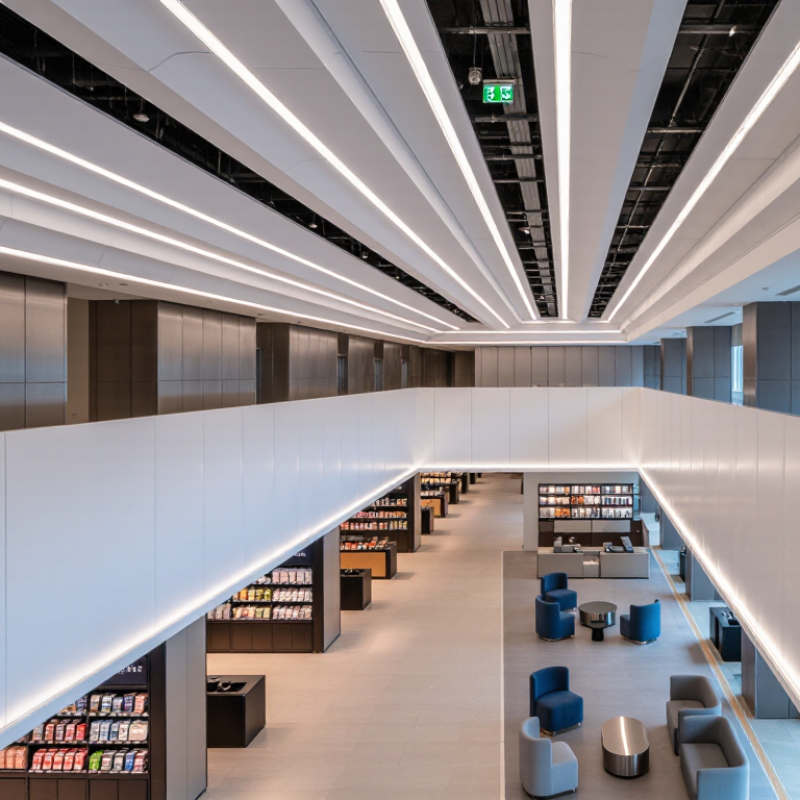
Top 10 Wall to Wall Lighting Systems for Global Buyers
Understanding Wall-to-Wall Lighting Systems and Their Applications
Wall-to-wall lighting systems create continuous illumination across ceilings, walls, or architectural recesses. They reduce dark gaps and support consistent visual comfort in offices, retail spaces, hotels, and healthcare facilities. The term is not perfectly standardized. Some suppliers describe linear profiles, while others include modular panels and illuminated wall surfaces.
The International Energy Agency reports that LEDs account for more than half of global lighting sales. This shift supports efficient, controllable systems with longer service life. The U.S. Department of Energy also notes that connected lighting can reduce energy use through occupancy and daylight controls. In practical projects, these controls matter most near windows, meeting rooms, and corridors. A poorly positioned sensor can still waste energy. That detail is often missed.
Top systems include recessed linear channels, surface-mounted lines, suspended continuous fixtures, cove lighting, luminous ceiling panels, backlit walls, modular grids, magnetic tracks, tunable-white systems, and emergency-integrated designs. Each option suits a different ceiling structure and maintenance plan. Global buyers should verify photometric files, ingress protection, flicker performance, driver compatibility, and local electrical requirements. One installation may look elegant but remain difficult to repair.
Tips: Request an on-site lighting calculation before ordering. Compare delivered lumens, not fixture wattage alone. Check color consistency across long runs. Allow access panels near drivers and control equipment. For international projects, confirm voltage ranges, certifications, spare-part availability, and warranty terms in writing.
It provides continuous illumination across ceilings, walls, or recessed architectural areas. It reduces dark gaps. The term can include linear profiles, panels, or illuminated surfaces.
Recessed linear systems create clean ceiling lines. Cove lighting gives soft reflected light. Wall-washing brightens vertical surfaces. Track and modular systems support layout changes.
Compare delivered lumens, not wattage alone. Review beam angles, glare ratings, color consistency, and photometric files. A brighter system is not always better.
Confirm voltage, frequency, safety certification, fire requirements, and control compatibility. Check spare parts and warranty terms in writing. Local approval can change everything.
Occupancy and daylight controls can reduce unnecessary operation. Sensors work well near windows, meeting rooms, and corridors. Poor positioning may still waste energy.
A small sample can reveal uneven spacing, glare, or visible dark joints. Wall color and furniture can change the result. Drawings may hide these problems.
Leave access panels near drivers and control equipment. Check whether installers can cut, join, and repair the system easily. Elegant designs can be difficult to fix.
Dusty or humid spaces need suitable ingress protection and cleaning access. Retail lighting should show fabrics, food, and skin tones naturally. Coastal conditions need extra review.
It adjusts color temperature for offices, retail areas, and hospitality spaces. The flexibility is useful. Yet complicated controls may confuse users and need better commissioning.
Many buyers focus on the purchase price only. Long shipping and custom replacement parts can increase costs. I may overvalue appearance sometimes; practical repair access matters more.
Wall to wall lighting systems are designed to create continuous, balanced illumination across large interior surfaces, making them suitable for offices, retail spaces, hospitality venues, healthcare facilities, and modern residential projects. This article introduces the main system types, including linear, modular, recessed, surface-mounted, and integrated solutions, while examining their key features such as light distribution, color temperature, dimming control, durability, and installation flexibility.
It also compares each option in terms of visual performance, energy efficiency, maintenance, design adaptability, and installation requirements. For global buyers, special attention is given to electrical compatibility, safety certifications, environmental ratings, and regional standards. The final selection should consider the project’s architectural style, operating conditions, local regulations, budget, control preferences, and long-term maintenance needs. By evaluating these factors carefully, buyers can choose Wall to wall lighting systems that deliver reliable performance, efficient energy use, and consistent visual quality across different markets.