

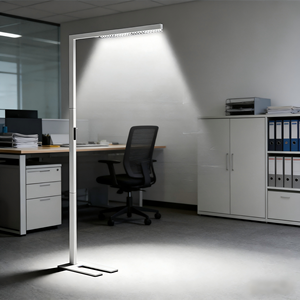
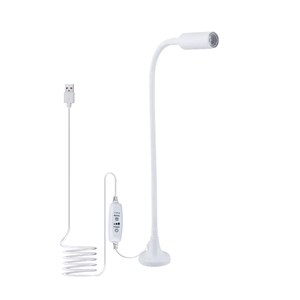
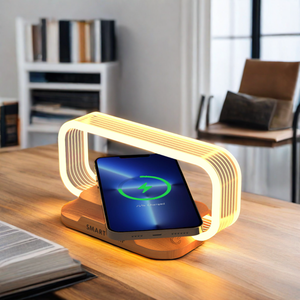
Industrial Task Lighting Engineering: Technical Benchmark & Compliance Overview
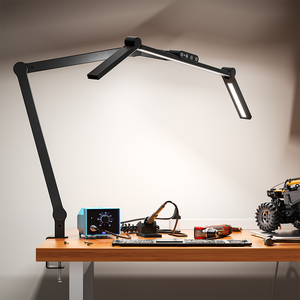
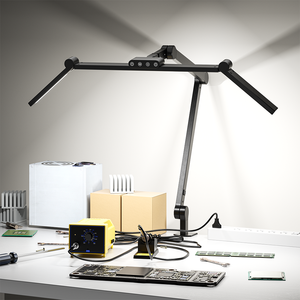
In modern manufacturing, precision micro-assembly, automotive repair, and technical laboratory environments, task lighting is no longer treated as a simple ambient luxury—it is a critical ergonomic parameter directly linked to operational yield, visual comfort, and worker safety. Selecting a validated CE certified task lighting supplier and exporter is fundamental for commercial buyers, electrical importers, and OEM contract project specifiers operating across European, Middle Eastern, and North American markets.
True information gain in industrial luminaire engineering stems from understanding the interaction between optical physics, thermal management, photobiological safety, and mechanical articulation endurance. While mass-market consumer desk lamps frequently sacrifice lumen stability and electromagnetic compatibility (EMC) for reduced bill-of-materials costs, commercial-grade task luminaires must strictly satisfy European Union Directives including the Low Voltage Directive (LVD 2014/35/EU), Electromagnetic Compatibility Directive (EMC 2014/30/EU), and Restriction of Hazardous Substances (RoHS 2015/863/EU).
Optical Engineering: Chromatic Consistency & Micro-Prismatic Glare Control
For technicians performing high-density SMT soldering, watchmaking, or forensic auto-body inspection, spectral quality dictates visual visual performance. Color Rendering Index (CRI) measured under standard CIE 13.3 protocols must evaluate not merely general R1–R8 values, but specifically the deep red spectrum (R9 > 80) and saturated color coordinates (R12 for strong blue). Premium task luminaires utilize full-spectrum LED dies matched with multi-layer micro-prismatic optical diffusers.
Unified Glare Rating (UGR) management is another engineering cornerstone. High illuminance levels (ranging from 1,000 lx to 2,500 lx at a working surface distance of 400 mm) can cause severe visual fatigue if high luminance sources are directly exposed to the operator's line of sight. By employing indirect light guides, side-emitting light distribution optics, and anti-glare honeycomb louvers, our task lamp architectures maintain UGR values below 19, maximizing visual acuity while minimizing eye strain during extended 8-hour shifts.
| Performance Specification | Standard Consumer Desk Lamp | Commercial CE Task Luminaire | Industrial High-Precision Task Light |
|---|---|---|---|
| Color Rendering Index (CRI) | Ra 70 – Ra 80 (R9 < 0) | Ra 90+ (R9 ≥ 50) | Ra 95 – Ra 98 (R9 ≥ 90 / Full Spectrum) |
| Flicker Index (IEEE 1789) | High Risk (> 8% PWM flicker) | Low Risk (< 3% output ripple) | Flicker-Free Zero Ripple (< 0.5% Constant Current) |
| Glare Control (UGR Rating) | Unregulated (UGR > 25) | UGR < 22 (Opal Diffuser) | UGR < 16 (Micro-Prismatic Optical Array) |
| Mechanical Arm Endurance | < 5,000 flex cycles | > 30,000 flex cycles | > 100,000 flex cycles (Dual-Spring Dampening) |
| Compliance Certification | Self-Declared / Basic CE | TÜV / GS / CE / RoHS LVD+EMC | Full CE, RoHS, ErP Stage 2, ESD Safe Directive |
Enterprise Advantage: Integrated Manufacturing & OEM/ODM Customization
Originating from an established lighting manufacturing heritage with deep roots in European fixture design, our manufacturing ethos combines architectural aesthetics with rigorous industrial quality control. Unlike trading intermediaries that rebrand off-the-shelf components, our fully integrated production facility in Aldaia, Valencia controls the end-to-end manufacturing chain: from aluminum extrusion die casting, robotic CNC machining, and automated SMT placement, to photometric sphere testing, powder coating, and final electrical safety isolation auditing.
In-House Production Control
Every luminaire undergoes 100% aging tests, high-voltage insulation breakdown checks, and ground-continuity verification prior to export packaging.
Bespoke OEM / ODM Tailoring
We modify arm reaches, CCT color temperatures (2700K-6500K), mounting fixtures (heavy steel bases, C-clamps, magnetic mounts), and housing finishes (RAL color matching).
Complete European CE Compliance
Full technical dossiers available including IES/LDT photometric files, CE declarations, RoHS material test reports, and EMC radiated emission certificates.
Strategic Industry Trends: Future Outlook for B2B Task Lighting Procurement (2025–2030)
As global electronics assembly and technical work environments rapidly transition toward Smart Factory (Industry 4.0) standards, task lighting procurement requirements are undergoing four fundamental structural shifts:
- Integration of Human-Centric Lighting (HCL) & Dynamic CCT Tuning: Modern assembly personnel require circadian-aligned lighting. Suppliers must provide dual-channel CCT control ranging from warm 2700K light for relaxed visual tasks to 6500K daylight-spectrum light for extreme detail inspection.
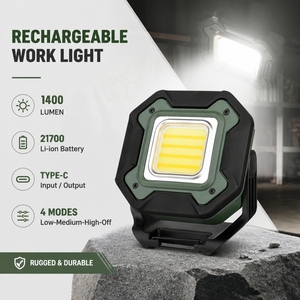
- High-Energy Density Cordless Battery Technologies: Portable mechanic lights and repair bench task lamps are shifting toward high-capacity 21700 lithium-ion battery cells (6000mAh+), offering up to 1400 Lumens with fast USB-C PD charging protocols and magnetic quick-release bases.
- ESD Safe (Electrostatic Discharge) Dissipative Coatings: In semiconductor repair and micro-electronics production lines, static discharges ruin sensitive IC boards. Next-generation task lights incorporate surface resistance materials ($10^6$ to $10^9$ ohms/sq) to prevent ESD damage.
- Circular Economy & Repairability Directives (EU Ecodesign ErP): Future-proof procurement requires modular driver replaceability, recyclable aluminum housing alloys, and accessible LED board replacement parts to extend fixture service lifespans past 10 years.
B2B Procurement FAQ: Essential Guidance for Buyers & Specifiers
What specific documentation confirms CE compliance for task lighting exports?
A complete CE compliance package includes the Manufacturer's Declaration of Conformity (DoC), LVD safety test reports (EN 60598-1 / EN 60598-2-4), EMC emission and immunity reports (EN 55015 / EN 61547), and RoHS 3 10-substance chemical analysis reports issued by accredited ISO 17025 laboratories.
Can you customize task light mounting bases and extended arm reaches for workstation furniture?
Yes. As a direct manufacturer, we engineer custom heavy-duty steel clamp brackets, wall-mounting rosettes, magnetic positioning bases, and dual-articulated extension arms spanning up to 1.2 meters to fit specialized industrial workbench systems.
How do high-CRI (CRI 90+ / 95+) task lights improve maintenance and assembly yields?
High CRI ensures accurate color discrimination among color-coded wire harnesses, resistors, and PCB components, drastically reducing assembly errors, eye strain, and inspection reworks caused by spectrum distortion in standard CRI 70/80 LEDs.
What are the wholesale minimum order quantities (MOQs) and lead times for OEM projects?
Standard catalog models feature flexible MOQs starting at 50 to 100 units per item. Custom OEM/ODM orders with specialized powder-coating, branding, or custom optical drivers typically operate under a 500-unit MOQ with standard production lead times of 25–35 days.
Are photometric files (IES / LDT) available for architectural lighting calculations?
Yes. Registered engineering clients and lighting designers can request laboratory-measured .IES and .LDT photometric files directly for DIALux and RELUX lighting simulation and lux distribution planning.
What driver protection mechanisms are integrated to handle industrial grid voltage fluctuations?
Our commercial task light drivers feature wide AC input ranges (100V–240V 50/60Hz), built-in 2kV surge protection, over-voltage protection (OVP), over-current protection (OCP), and thermal fold-back safety logic.