Engineered for high-end hospitality, commercial spaces, luxury retail, and architectural specifications. Designed with high CRI 95+, anti-glare optics, and smart dimming controls.
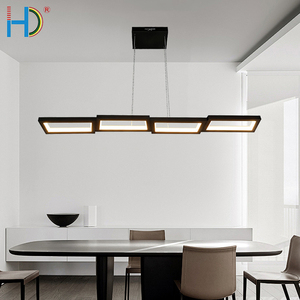
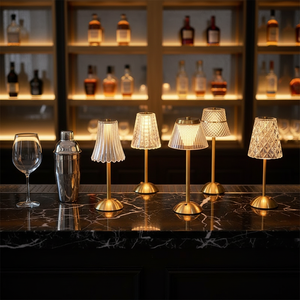
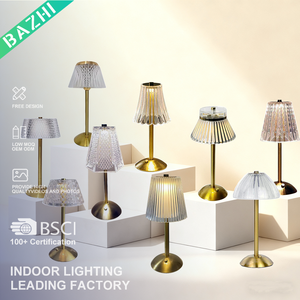
As global architectural standards evolve toward decarbonization and human-centric design, commercial buyers must align supply chain strategies with these five macro trends.
Modern commercial architecture is transitioning from static CCT illumination to dynamic circadian lighting systems. Sourcing downlights and pendant systems with 5-CCT selectable switches and DALI-2 DT8 dual-channel drivers allows specifiers to harmonize indoor CCT (from 2700K to 6500K) with natural solar movement, enhancing occupant wellness in office suites and luxury hospitality.
Standard CRI 80 fixtures are no longer acceptable in premium hospitality or architectural retail environments. Sourcing trends prioritize full-spectrum COB LED chips delivering CRI 95+ and R9 values above 80. High fidelity rendering preserves original interior material textures, organic wood grains, luxury fabrics, and spatial depth without color distortion.
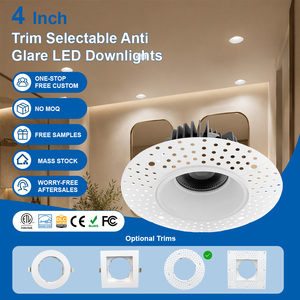
Minimalist interior design demands seamless architectural ceiling visual continuity. Procurement is heavily leaning toward trimless mud-in downlights and recessed linear systems that eliminate visible flanges. Combined with deep-set optics and micro-prismatic reflectors, these fixtures achieve unified glare ratings (UGR < 16) for optimal visual comfort.
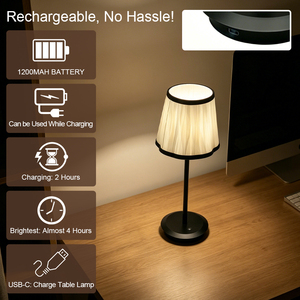
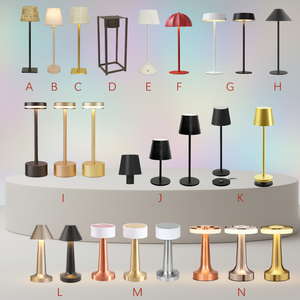
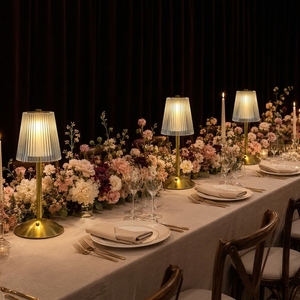
Flexibility in hospitality dining layouts has driven explosive procurement growth for IP54-rated cordless rechargeable table lamps. Featuring high-density 5200mAh lithium cells, stepless touch dimming, and optical refractor lenses, these luminaires eliminate costly floor wiring while delivering ambient mood lighting across dining terraces and event spaces.
International environmental regulations require enterprise procurement teams to audit carbon footprints. Chinese manufacturing leaders are implementing circular economy protocols—utilizing recycled die-cast ADC12 aluminum, replaceable driver modules, FSC-certified wooden shade components, and 100% plastic-free packaging.
Architectural lighting is no longer an isolated hardware purchase. Sourcing teams prioritize integrated LED drivers supporting DALI-2, Zigbee 3.0, Casambi, and Matter protocols. This ensures smooth commissioning within centralized Building Management Systems (BMS) for commercial real estate.
From passive thermal engineering to optical physics: How leading Chinese manufacturers deliver international specification benchmarks.
The transition from legacy faceted reflectors to customized Total Internal Reflection (TIR) acrylic and silicone optical lenses represents a major technological leap. Modern 4-inch trimless downlights utilize computer-modeled TIR lens geometry to achieve tight beam angles (15°, 24°, 36°, 60°) with zero secondary light halo. Paired with dark-light honeycomb louvers and specular internal reflectors, light engines direct illumination precisely where needed without exposing hotel guests or office workers to direct diode glare.
Luminaires operating in commercial environments require continuous high lumen output without thermal degradation. Top Chinese manufacturers have incorporated cold-forged 6063 aluminum heat sinks and phase-change heat pipe technologies. Maintaining LED junction temperatures below 75°C under ambient 40°C operating conditions ensures an operational lifespan exceeding L90B10 > 50,000 hours, virtually eliminating maintenance overhead for facility managers.
The electrical integrity of an architectural light relies heavily on driver topology. Industry-leading suppliers integrate constant-current flicker-free drivers with IEEE 1789-2015 compliance. With deep amplitude dimming capabilities down to 0.1%, these drivers prevent high-frequency ripple currents, protecting occupants from invisible eye strain and avoiding flickering issues on HD video calls and security cameras.
China's architectural lighting manufacturing cluster offers unprecedented customization agility. Rather than forcing projects into rigid catalog dimensions, factories provide rapid 3D prototyping within 72 hours, custom CNC housing milling, bespoke finish lacquering (matching RAL, Pantone, or physical joinery samples), and tailored mounting hardware for complex architectural ceiling grids.
Combining Mediterranean design philosophy with China's precision manufacturing infrastructure to deliver fully certified, end-to-end architectural lighting solutions.
From die-casting aluminum housings, CNC machining, metal spinning, and textile shade stitching to SMT LED placement and final electrical assembly, every process occurs under one unified quality management system. Short manufacturing chains guarantee strict component traceability and reliable delivery timelines.
Our facility houses an advanced darkroom equipped with 2-meter Integrating Spheres and Type-C Mirror Goniophotometers. We generate verified IES and LDT photometric distribution files for every luminaire family, enabling lighting designers and architects to run accurate Dialux simulations.
All commercial luminaires are designed to meet stringent global market standards. Products are backed by CE declarations, RoHS compliance, IP65/IP54 ingress protection certificates, UL/ETL listed driver configurations, and SAA approvals for seamless export to Europe, North America, and Australia.
Our dedicated engineering and export team works directly with architects, interior specifiers, lighting designers, and wholesale distributors. We provide photometrics, sample validation, custom finish matching, and tailored quotation support within 24 hours.
Inquire Now — Speak With an EngineerClear, technical answers to the most common questions raised by commercial procurement managers, interior architects, and engineering contractors.
To guarantee zero color shifting across thousands of fixtures, leading manufacturers source LED chips restricted strictly to 3-step MacAdam Ellipse (SDCM ≤ 3) binning. This ensures visual uniformity across high-volume shipments for corridors, suites, and public lobbies.
Specifiers receive a full technical package including 3D BIM/Revit models, verified IES/LDT photometric files, CAD dimensional drawings, driver specification datasheets, IP testing reports, and step-by-step installation instructions for various ceiling types.
Yes. Because production occurs in our own manufacturing facilities, we routinely modify suspension lengths, canopy mounting plates, shade materials, and custom powder-coated RAL finishes to align perfectly with joinery samples or architectural interior schemes.
Luminaires undergo rigorous thermal imaging and thermocoupled junction temperature testing during prototyping. Coupled with LM-80 tested LED packages and TM-21 lifespan projection models, our downlights maintain over 90% lumen output after 50,000 continuous operating hours.
Our cordless lamps feature high-capacity lithium-ion cells with integrated BMS (Battery Management System) boards offering over-charge, over-discharge, and thermal protection. Sealed IP54 die-cast aluminum bodies ensure durability against beverage spills and outdoor weather exposure.
Standard catalog samples ship within 3–5 business days. Customized OEM/ODM prototypes requiring bespoke CNC tooling take 10–14 days, while full mass production runs are typically completed in 25–35 days depending on volume and certification requirements.