Explore our high-performance OEM/ODM luminaire portfolio engineered for hospitality, commercial, and architectural specifications.
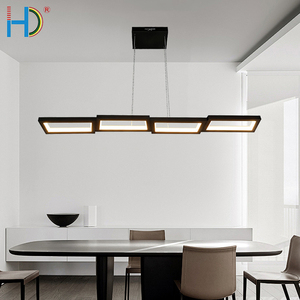
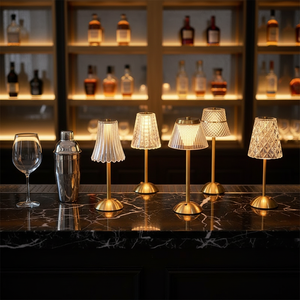
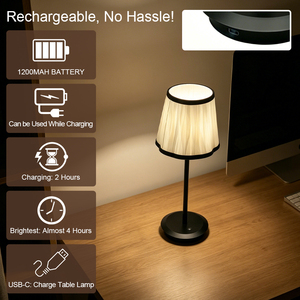
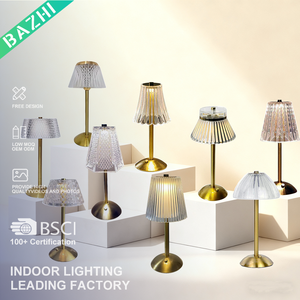
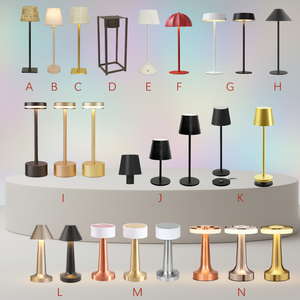
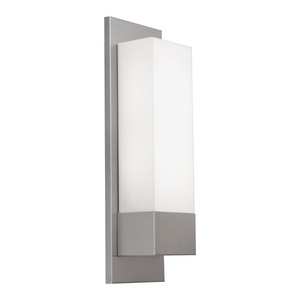
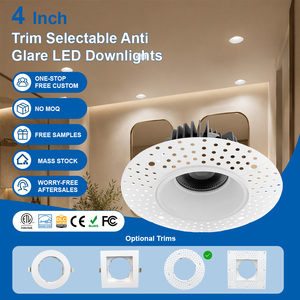
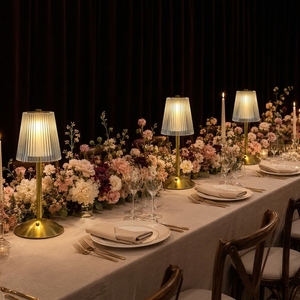
Direct from our integrated manufacturing center in Aldaia, Valencia (FM Iluminación), we merge European design heritage with high-capacity B2B manufacturing.
Unlike standard white-label traders, we manage the entire manufacturing chain under one roof—from initial CAD sketches and thermal simulation to metal spinning, CNC machining, and automated SMD LED mounting.
All OEM flood lights and architectural luminaires undergo full photometric goniophotometer testing, thermal stress verification, and ingress testing. Certified for CE, RoHS, CB, and IP66/IK10 ratings.
We modify physical dimensions, housing materials (ADC12 aluminum, marine-grade 316 stainless steel), beam distribution optics (15° to 120° asymmetric), and finish colors (RAL palette) to meet exact engineering specifications.
In modern commercial outdoor projects—ranging from high-mast port infrastructure and stadium floodlighting to architectural façade illumination—luminaires are subjected to extreme environmental stress. Cheap off-the-shelf flood lights continuously fail due to thermal fatigue, driver degradation, and optical yellowing.
Our OEM engineering framework implements copper-substrate PCB technology coupled with cold-forged aluminum heatsinks. By maintaining LED junction temperatures ($T_j$) below $75^\circ\text{C}$ even at high ambient temperatures ($45^\circ\text{C}$), we ensure an L70/B10 operational lifetime exceeding 100,000 hours.
Furthermore, our micro-prismatic glass and optical PMMA lens arrays deliver uniform light distribution without stray light pollution, making our floodlights compliant with international Dark-Sky Regulations.
Key technological, regulatory, and architectural shifts driving global procurement specifications in commercial flood lights and high-power exterior illumination.
Procurement mandates have transitioned from simple ON/OFF relay switching to intelligent, networked lighting controls. Specifiers now demand factory-integrated DALI-2 drivers, 0-10V dimming, and standardized 7-pin ANSI C136.41 NEMA or Zhaga Book 18 sockets. This allows seamless integration into Smart City Central Management Software (CMS) for automated energy monitoring and adaptive dimming schedules.
With global energy cost fluctuations and aggressive corporate net-zero commitments, procurement teams evaluate fixtures on total lifecycle cost rather than initial CapEx. The shift toward high-efficacy LED packages (such as Lumileds 5050 or Cree XP-G3) driven by ultra-efficient drivers (>95% efficiency) achieves system-level lux outputs previously requiring twice the wattage, reducing energy usage by over 45% compared to legacy LED systems.
In accordance with European EcoDesign directives and global sustainability guidelines, commercial buyers reject sealed, disposable flood lights. Modern OEM specifications require modular gear trays where drivers, surge protection devices (SPDs), and LED light engines can be replaced or upgraded in the field without dismantling the entire housing, extending luminaire operational lifespans beyond 15 years.
Pioneering advancements changing the landscape of high-output floodlight engineering and export manufacturing.
Modern architectural floodlighting requires dynamic chromatic adaptation. Future-ready OEM flood lights integrate multi-channel color tuning (2700K to 6500K) and RGBW capabilities controlled via DMX512/RDM protocols, allowing buildings and infrastructure to alter their aesthetic appearance for events while maintaining biological dark-sky safety during off-peak hours.
As luminaire form factors shrink while lumen requirements rise, traditional aluminum die-casting reaches its thermal limits. OEM manufacturing is adopting graphene-coated heatsinks and vapor chamber thermal conduits, offering a 30% increase in thermal conductivity and significantly reducing total luminaire weight for safer high-mast pole installation.
Electrical grid instability and lightning strikes are the primary causes of field failures in exterior lighting. Future procurement benchmarks require multi-stage transient surge protection devices (SPD) capable of absorbing repetitive strikes up to 20kV/10kA, paired with class-II electrical insulation and automated thermal cutoff switches.
Comprehensive engineering benchmarks for project specifiers, electrical engineers, and commercial distributors.
| Performance Parameter | Standard Commercial Grade | Architectural High-Precision | Heavy Industrial & Port Grade |
|---|---|---|---|
| Luminous Efficacy | 130 – 145 lm/W | 150 – 165 lm/W | 160 – 180 lm/W |
| Housing Material | Die-Cast ADC12 Aluminum | A360 Marine-Grade Aluminum | Anodized ADC12 + Corrosion Coating |
| Optical Distribution | 30° / 60° / 90° Symmetrical | Asymmetric 130°x60° / 15° Narrow Beam | Custom Batwing & Forward-Throw Optics |
| Ingress & Impact Rating | IP65 / IK08 | IP66 / IK09 | IP67 / IP68 / IK10 Dual-Sealed |
| Driver Topology | Fixed Output / 1-10V Dimming | DALI-2 / DMX512 / Programmable | Inventronics / MeanWell Industrial 20kV SPD |
| Operating Temperature | -20°C to +45°C | -30°C to +50°C | -40°C to +60°C (Extended Heatsink) |
| Color Rendering Index (CRI) | Ra > 70 / 80 | Ra > 90 (R9 > 50) | Ra > 70 / 80 / Special TLCI 90+ |
Detailed technical answers for B2B buyers, architectural specifiers, and OEM purchasing directors.
As a direct manufacturer based in Aldaia (Valencia), we offer comprehensive original equipment manufacturing (OEM) and original design manufacturing (ODM) services. We can customize: 1) Photometric optical beam angles via custom PMMA lenses; 2) LED chip configuration (Cree, Nichia, Lumileds, OSRAM); 3) Driver brands (MeanWell, Inventronics, Philips Xitanium) and control protocols (DALI-2, Zigbee, DMX); 4) Custom housing powder coating in any RAL color; 5) Private label laser etching, custom branding, and packaging designs.
For seaside, maritime port, or high-humidity outdoor environments, standard powder coatings quickly fail. Our coastal-grade floodlights undergo a specialized multi-stage pre-treatment process: chromate conversion followed by a high-durability electrophoretic coating and akzoNobel outdoor-grade fluorocarbon powder finish. Housing hardware is strictly upgraded to Grade 316 Stainless Steel, passing over 2,000 hours of ASTM B117 salt spray chamber testing without surface oxidation.
For standard catalogue modifications (such as custom CCT, cable lengths, or housing color), our MOQ starts as low as 50 to 100 units. For fully bespoke ODM fixtures requiring custom die-cast mold creation, project feasibility and tooling timelines are established case-by-case. Standard production lead time is typically 3 to 4 weeks after sample approval and technical sign-off.
Yes. All luminaires manufactured in our facility fully comply with European Low Voltage Directive (LVD 2014/35/EU), Electromagnetic Compatibility Directive (EMC 2014/30/EU), and RoHS 2011/65/EU. Complete technical documentation—including IES photometric distribution files, CE Declarations of Conformity, IP66 waterproof test reports, and driver specification sheets—is readily accessible for registered engineering specifiers.
Excessive heat directly degrades LED phosphor and driver capacitors. Our engineering team utilizes ANSYS Icepak thermal simulation software to design high-surface-area radial cooling fins. The LED aluminum core board uses high thermal conductivity dielectric layers (2.0 W/m·K) and thermal grease interfacing directly with the housing chassis, ensuring a junction temperature differential under $15^\circ\text{C}$ to prevent premature lumen degradation.
Whether you require custom architectural flood lighting, high-mast commercial illumination, or bespoke contract luminaires, our engineering team in Valencia is ready to bring your technical specifications to life.