In the rapidly evolving global architectural and commercial contract market, selecting a trusted industrial lighting manufacturer extends far beyond simply ordering off-the-shelf fixtures. Modern specification demands high luminous efficacy, precision color rendering (CRI > 95, R9 > 80), strict photobiological safety (RG0/RG1 blue-light hazard clearance), and seamless integrated thermal management. Operating under the manufacturing umbrella of FM Iluminación in Aldaia, Valencia (Spain), Olé Lighting represents over three decades of Mediterranean design heritage combined with rigorous European engineering standards.
This whitepaper provides commercial specifiers, interior architects, electrical engineers, and global procurement officers with a detailed technical benchmark. From custom luminaire prototyping to sustainable manufacturing practices, discover how tailored lighting solutions drive long-term return on investment (ROI) across hospitality, high-end office environments, retail, and luxury residential projects.
Precision-engineered lighting solutions curated for hospitality, office, and upscale commercial contract specifications.
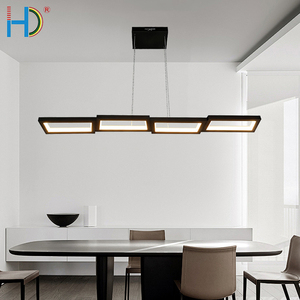
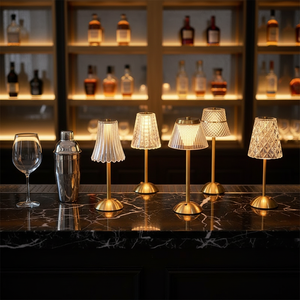
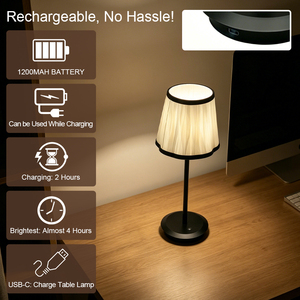
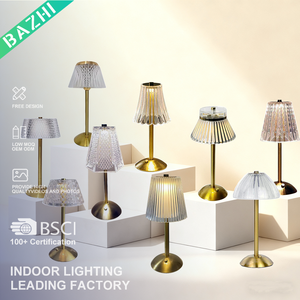
Strategic insights for specifiers, project developers, and commercial procurement leaders.
The commercial lighting industry is undergoing a paradigm shift driven by stringent energy efficiency mandates (such as the EU Energy Efficiency Directive), evolving architectural demands, and human-centric design philosophies. Procuring lighting hardware today is no longer an isolated transactional decision; it requires strategic foresight regarding lifecycle maintainability, intelligent interoperability, and environmental sustainability.
Dynamic CCT tuning (ranging from 2200K warm ambient to 6500K daylight simulation) is becoming standard in office and healthcare procurement to align artificial illumination with natural circadian rhythms, increasing productivity and well-being.
Commercial fixtures are transitioning into data nodes. Future-proof procurement demands wireless mesh connectivity (Casambi, Bluetooth SIG) and robust wired protocols (DALI-2 / D4i) for automated energy monitoring, occupant tracking, and daylight harvesting.
Leading European specifiers now require luminaires engineered for disassembly. Direct LED module replacement and field-serviceable drivers reduce embodied carbon and significantly minimize long-term e-waste over a 15-year building lifecycle.
| Performance Parameter | Standard Commercial Grade | Olé Lighting Specification | Impact on Project & Procurement |
|---|---|---|---|
| Color Rendering Index (CRI) | CRI 80 (Ra > 80, R9 < 0) | CRI 95+ (Ra > 95, R9 > 80) | Exact natural color rendition for hospitality interiors, art display, and luxury retail. |
| Color Consistency (SDCM) | 5-Step MacAdam Ellipse | ≤ 3-Step MacAdam Ellipse | Eliminates visible color variance between adjacent downlights or wall sconces. |
| Glare Control Rating | UGR > 22 (Standard lens) | UGR < 19 / UGR < 16 Options | Conforms strictly to EN 12464-1 workplace standards, eliminating visual fatigue. |
| Driver Lifespan & Dimming | 30,000 hrs (Basic Triac) | 50,000 - 100,000 hrs (DALI-2 / 0-10V) | Flicker-free (< 1% IEEE 1789) smooth deep dimming to 0.1% for scene control. |
| Customization Feasibility | Fixed catalogue dimensions | Fully customizable size/materials | Architects modify drop lengths, frame finishes, shade textiles, and IP ratings seamlessly. |
How innovative metallurgy, sustainable acoustics, and optical physics are redefining light fixtures.
The junction of aesthetic design and electrical engineering requires advanced material choices. At Olé Lighting’s manufacturing facility in Aldaia, Valencia, material R&D is centered around optimizing thermal dissipation while embracing sustainable, locally sourced tactile materials.
Excess heat is the primary cause of LED lumen depreciation ($L_{70}/B_{10}$) and chromaticity shift. Modern architectural fixtures utilize 6063-T5 aircraft-grade aluminum heat sinks with passive micro-fin geometry. This allows compact form-factor downlights and enclosed sconces to operate at junction temperatures ($T_j$) below 75°C, ensuring over 50,000 operating hours without color spectrum decay.
Open-ceiling corporate spaces and bustling restaurant dining rooms frequently suffer from severe acoustic reverberation. By integrating sound-absorbing recycled PET felt and flame-retardant (Class B-s1, d0) woven fabrics into oversized suspension lamps, luminaires double as acoustic baffles (NRC rating > 0.75), reducing sound flutter while illuminating spaces cleanly.
Moving beyond raw lumen output, modern optical engineering emphasizes visual comfort. Vacuum-metallized polycarbonate reflectors combined with micro-prismatic glare-suppression lenses create a "dark light" effect—where the light source remains virtually invisible from normal viewing angles, directing light exactly where required without visual glare.
Direct manufacturer capabilities tailored for international contract distributors, specifiers, and OEM partners.
Every step of production—metal lathe spinning, laser cutting, powder coating, textile shade hand-crafting, and photometer lab testing—takes place under one roof in Valencia, Spain. This ensures complete supply chain transparency and short lead times.
We modify existing catalogue families to fit architectural constraints. Modify suspension heights, shade dimensions, custom RAL color lacquering, or convert indoor wall sconces to IP65 outdoor grade according to your exact project submittal requirements.
Our luminaires strictly comply with European standards (CE, RoHS, EN 60598-1). Technical submittal packages including IES/LDT photometric files, CAD blocks, installation manuals, and driver data sheets are readily provided for specifiers.
Technical guidance for architects, lighting designers, and procurement managers.
Connect with our technical export office in Valencia to discuss custom project specifications, volume trade pricing, and sample requests for your upcoming commercial projects.