Specially customized for Ethiopian textile mills, industrial parks, logistical hubs, and commercial complexes requiring robust thermal performance and high lumen maintenance.
Ethiopia stands as one of Africa’s fastest-growing industrial economies. Driven by the Homegrown Economic Reform Agenda 2.0 and the expansion of state-backed and private industrial parks, the demand for industrial grade luminaires has undergone a fundamental structural shift. Modern manufacturing plants across Hawassa Industrial Park, Bole Lemi, Kombolcha, Dire Dawa, and the Eastern Industrial Zone in Dukem require specialized illumination frameworks capable of enduring continuous 3-shift operational stress, dust accumulation, high ambient temperatures, and significant electrical grid fluctuations.
As an authorized international manufacturing hub with European engineering lineage rooted in Spanish architectural precision (leveraging legacy standards from FM Iluminación and Olé Lighting), our industrial lighting factories supply high-efficacy LED solutions customized precisely for the operational parameters of Sub-Saharan Africa. Transitioning away from legacy metal halide and low-efficiency fluorescent tubes, our heavy-duty LED high bays, linear task fixtures, and architectural downlights directly address the local total cost of ownership (TCO) equation.
In industrial facilities located in ambient warmth environments such as Dire Dawa or Semera, thermal degradation is the leading cause of early driver breakdown and rapid lumen depreciation in cheap imported fixtures. Standard commercial LEDs experience severe junction temperature (Tj > 105°C) elevation, leading to color shift (chromaticity drift) and premature diode burnout. Our industrial factories utilize die-cast ADC12 aluminum thermal heat sinks engineered with vertical convection fin channels. By maintaining junction temperatures below 75°C under continuous 45°C ambient plant conditions, our luminaires guarantee an L80B10 operating lifespan exceeding 50,000 hours.
The Ethiopian electrical grid (operated by Ethiopian Electric Power) experiences frequent voltage sags, micro-interruptions, and peak transient spikes caused by heavy inductive load switching in nearby heavy manufacturing plants. Standard 220V drivers quickly fail under these conditions. Our factory equips all Ethiopian-bound industrial luminaires with wide-input isolated drivers (85V–277V AC or 180V–305V AC) integrated with multi-stage metal oxide varistors (MOV) and 6kV to 10kV surge protection devices (SPD). This electrical resilience prevents driver failure during severe utility grid disturbances.
Providing high Color Rendering Index (CRI > 90 and CRI 95) with 5000K daylight color consistency. Essential for strict color matching, fabric quality control, and reducing eye fatigue in Hawassa and Bole Lemi textile mills.
Sealed IP65 and IP66 luminaire enclosures featuring toughened PMMA optics prevent grain dust, particulate matter, and moisture ingress in food processing, grain milling, and coffee processing plants.
Delivering up to 160 lm/W. Lowers plant electricity consumption by up to 68% compared to traditional HID light sources, directly lowering factory overhead and peak power demand charges.
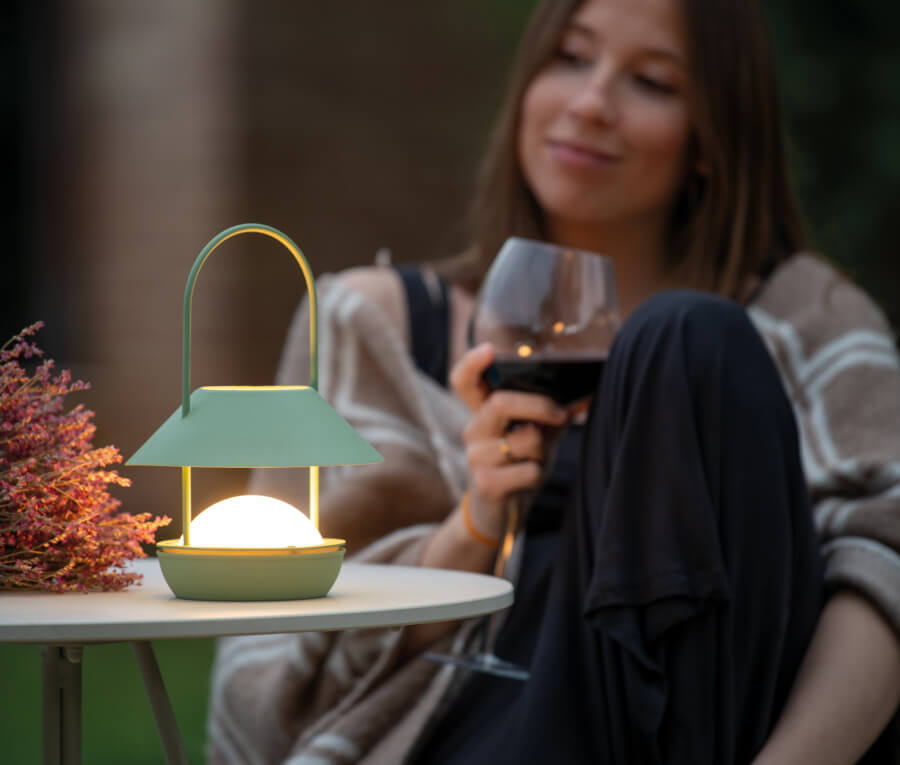
Beyond heavy industrial high bays, modern industrial parks in Ethiopia encompass administrative blocks, client showrooms, executive hospitality facilities, and commercial front desks. Recognizing that industrial projects demand a cohesive aesthetic, our factory floor offers custom finish coatings, tailored suspension systems, and specialized lumen packages.
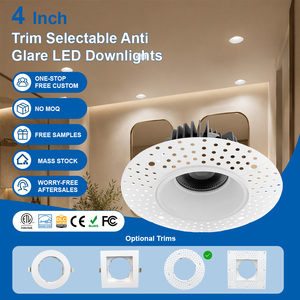
Whether adapting structural dimensions for high-bay warehouse ceilings or supplying low-glare UGR<19 recessed downlights for corporate park headquarters, our Valencia-inspired design engineering team ensures full compliance with international standards while satisfying local project drawings.
Why Ethiopian industrial developers and EPC contractors mandate engineering-grade fixtures for long-term infrastructure reliability.
| Performance Parameter | Our Industrial Factory Grade | Standard Low-Cost Imports | Operational Impact in Ethiopia |
|---|---|---|---|
| Operating Input Voltage | 180V – 277V AC (Option 85-305V) | 220V – 240V Narrow Range | Prevents fixture burnout during voltage drops & inductive spikes common in industrial zones. |
| Driver Thermal Rating | Tc = 85°C High-Temp Rated | Tc = 65°C Standard Commercial | Ensures continuous 24/7 operation in unconditioned Sub-Saharan factory buildings. |
| Surge Protection (SPD) | Integrated 6kV – 10kV SPD | 1kV – 2kV Basic Protection | Protects internal optics against lightning strikes and severe switching surges. |
| Color Rendering Index (CRI) | CRI 90+ / CRI 95 Available | CRI 70 – CRI 80 Standard | Crucial for textile color grading, pharmaceutical printing, and precision mechanical assembly. |
| Lumen Maintenance | L80B10 @ 50,000 Hours | L50B50 @ 15,000 Hours | Reduces maintenance labor costs and plant operational downtime for lamp replacements. |
Ethiopia’s industrial strategy places major emphasis on export-oriented manufacturing. Under guidelines from the Ethiopian Investment Commission (EIC) and the Ministry of Innovation and Technology (MInT), new factory installations are incentivized to adopt Green Building Practices and Energy Efficiency Compliance. Industrial facilities that reduce peak kilowatt demand optimize their operational licenses and gain priority access to grid connections.
In response to these trends, our lighting manufacturing facilities incorporate smart driver interfaces, including 0-10V dimming, DALI-2 digital controls, and microwave motion sensors. In high-bay logistics warehouses in Modjo Dry Port or Kality, intelligent sensors allow lights to auto-dim when aisle space is unoccupied, reducing auxiliary power consumption by up to an additional 40%.
As industrial parks increasingly deploy rooftop photovoltaic (PV) solar installations to supplement grid supply during daytime peak hours, lighting systems must handle smooth transitions between grid AC power, solar inverter outputs, and emergency diesel generator feeds. Our isolated switching drivers feature total harmonic distortion (THD < 10%) and high power factor (PF > 0.97), eliminating harmonic noise interference on microgrid solar inverters.
Every luminaire leaving our manufacturing plant undergoes a rigorous multi-stage testing protocol prior to container loading for shipment to Djibouti Port. Our quality control encompasses:
Addressing essential technical, regulatory, and shipping queries for factory lighting procurement in Ethiopia.
Our luminaires comply with international standards including CE, RoHS, IEC 60598-1 (Luminaires General Requirements), and IEC 62471 (Photobiological Safety). For Ethiopian imports, we supply full technical documentation, photometric IES files, and test reports required by the Ethiopian Conformity Assessment Enterprise (ECAE) and the Ethiopian Standards Agency (ESA) for pre-shipment verification.
We configure our industrial driver lines with ultra-wide input voltage ranges (180V-277V AC up to 305V AC) equipped with constant-current regulation circuitry. If grid voltage drops from 220V down to 180V during heavy machinery start-up in an industrial park, our lights maintain 100% stable lumen output without flickering or automatic shutdown.
Yes. As an authentic OEM/ODM manufacturing facility, we regularly adjust housing dimensions, beam angles (e.g., 60°, 90°, 120° or asymmetric distribution for high racks), mounting brackets, cable lengths, and color temperatures (3000K to 5000K High CRI 95) to match your M&E engineer's exact project specifications.
Standard factory production lead time is typically 15 to 25 working days depending on order volume and custom options. Sea freight from our main export port to Djibouti Port usually takes approximately 20 to 30 days, followed by inland multimodal container transport to Comet Transit Terminal or Modjo Dry Port in Ethiopia.
We provide a comprehensive 5-year factory warranty on all industrial and commercial LED product lines. In the rare event of a component failure, we ship replacement isolated drivers or LED modular arrays directly via express air freight to minimize any plant operational downtime.
High Color Rendering Index (CRI 95) at 5000K provides natural daylight spectrum lighting. In textile and garment manufacturing, this allows workers and QA inspectors to accurately distinguish subtle thread color variations and fabric defects, significantly reducing rework rates while minimizing visual fatigue during night shifts.
Get in touch with our engineering export sales team today for customized photometric layouts, factory-direct pricing, and technical project consultation.